
Uganda is a landlocked country bordered by Kenya in the east, Sudan in the north, the Democratic Republic of the Congo in the west, Rwanda in the southwest and Tanzania in the south. The country along with four others forms the East African Community, a trading block of approximately 150 million people. Uganda’s total land area is 241,559 sq km. About 37,000 sq km of this area is occupied by open water while the rest is land. The southern part of the country includes a substantial portion of Lake Victoria, which it shares with Kenya and Tanzania.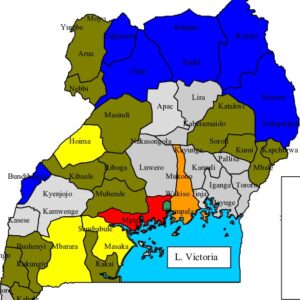
Uganda is located on the East African plateau, averaging about 1,100 metres (3,609 ft) above sea level. The plateau generally slopes downwards to the Sudan explaining the northerly tendency of most river flows in the country. Although generally equatorial, the climate is not uniform since the altitude modifies the climate. Uganda’s elevation, soil types and predominantly warm and wet climate impart a huge agricultural potential to the country. They also explain the country’s large variety of forests, grasslands and wildlife reserves. Uganda has a total population of about 32 million people. Over 80 per cent of the population live in rural areas and directly survive off the environment and natural resource base.

Uganda suffered political turmoil and devastating economic drawbacks between 1971 and 1986. This extended period of regression left Uganda as one of the world’s poorest countries. The country however commenced wide ranging economic reforms including liberalization of key markets and sectors, prices and privatized public enterprises beginning 1987. These reforms have improved economic performance and sustained economic at about 7 per cent per annum for the last ten years.
Economic growth has however not led to widespread poverty reduction. Whereas an average annual economic growth rate of over 7 per cent was sustained since 2000, poverty levels on the converse, increased by 3.8 per cent over the same period. This contradiction is attributed to a number of reasons. First, most economic growth involved short-term exploitation of depletable natural resources including forests, fisheries and soils. Economic growth also engendered direct environmental costs including pollution, and also suffered distributional inefficiencies. This lack of a sustainable premise for economic development is responsible for the rising awareness of sustainable consumption and production in Uganda.
Ugandan families and communities struggle to access healthcare, education and other basic services and young children often lack in the four areas of development. The country’s health indicators are among the lowest in sub-Saharan African. Preventable diseases – including prenatal and maternal illnesses, malaria and diarrhoea claim many lives of young children before age of 10.